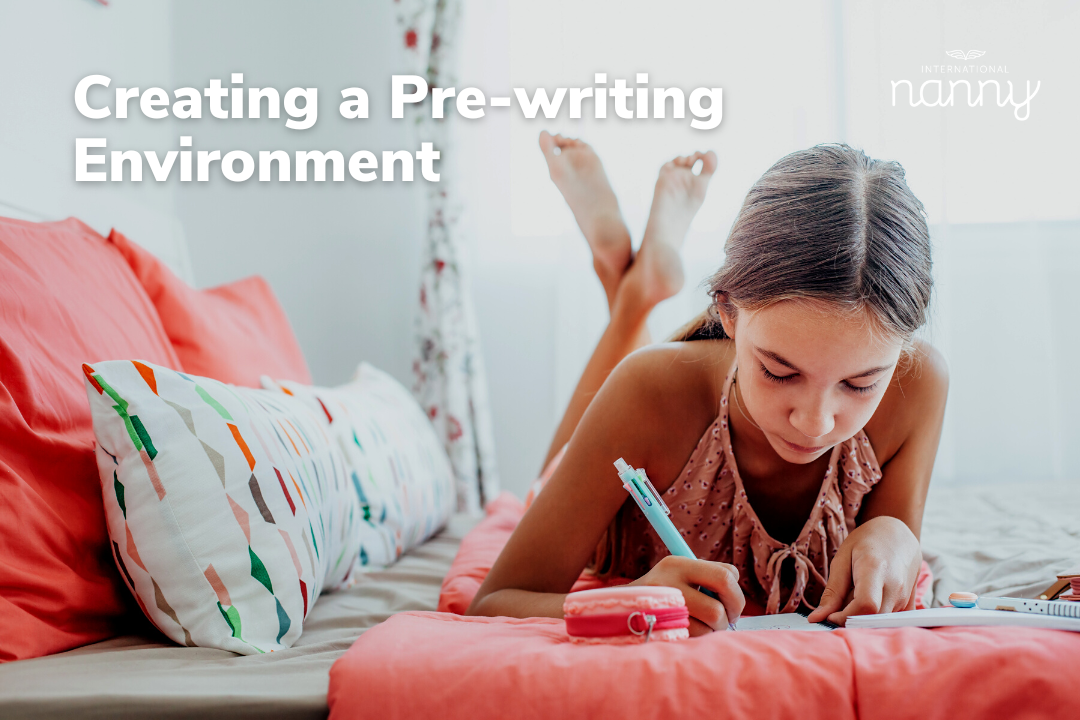
Creating a Pre-writing Environment

As a nanny, you have the opportunity to play a role in helping young children become excited about writing. Writing is an essential skill that opens up avenues for communication, creativity, and critical thinking. It is crucial to create a pre-writing environment in the family home to nurture this skill in young children. In this article, we will cover tips and tricks for nannies to engage children in writing while creating a pre-writing environment in the family home.

Benefits of Encouraging Writing to Toddlers and Young Children

There are plenty of benefits to nannies supporting children with their pre-writing skills. These skills underpin development in a range of different areas which we look at in some more detail below:

Creating a Pre-writing Environment

Enhances Communication and Language Development

Writing plays a critical role in language and communication development. Encouraging children to write helps them learn new words, practise their sentence construction, and improve their vocabulary and comprehension.

Develops Fine Motor Skills

Writing activities involve the use of precise motor movements to hold a writing instrument, control the movement of the hand, and manipulate materials. This process helps in the development of fine motor skills, hand-eye coordination, and dexterity of the hand.

Sparks Creativity and Imagination

Writing is a creative activity that can unleash a child’s imagination. The freedom to express themselves through writing encourages children to explore their thoughts, feelings, ideas, and experiences.

Cultivates Critical Thinking

Writing promotes critical thinking and problem-solving. When writing, children learn to analyse information, draw conclusions, make judgments and apply information to specific situations.

How to Create a Pre-Writing Environment in the Family Home

Much of what you can read about pre-writing skills online is tailored towards preschools or nursery settings but Nannies play a unique and vital role in supporting children’s development in a home environment. Here we consider how this can be done effectively.

Creating a Pre-writing Environment

Provide Writing Tools

Providing children with developmentally appropriate writing tools helps ignite their interest in writing. Colourful and child-friendly tools like crayons, markers, chalk, and pencils can help children express themselves, experiment with writing, and facilitate communication.

Incorporate Writing into Daily Activities

Incorporating writing activities in the child’s everyday activities is an excellent way to develop their interest in writing. Activities such as helping with grocery lists, writing menu ideas, and birthday cards can encourage language development and allow children to practise their fine motor skills.

Make It Fun

Making writing interesting, and fun can help children develop a love for writing. Incorporate fun games like writing comics, writing a story one letter at a time, hangman, and creating picture stories to pique their interest.

Creating a Pre-writing Environment

Encourage Creative Writing

Creative writing allows children to explore their imagination and provides an opportunity to express themselves. Encourage children to write stories, and poetry, and create imaginary worlds to help them develop their critical thinking and foster their creativity.

Start with Small Writing Exercises

Starting small helps children build confidence, and taking baby steps in writing development and building a healthy foundation from the beginning. Provide writing exercises like copying sentences, tracing letters, or free-writing activities to help children practise their writing skills.

Read and Write Together

Incorporating writing and reading as a joint activity helps create a value for writing and develops their language and writing skills. Shared writing activities such as keeping a journal or writing letters to pen pals can help children build their communication and writing capabilities.

Positive Reinforcement

Positive reinforcement that encourages and celebrates a child’s achievements in writing is fundamental in helping establish self-confidence and motivation. Praising every small achievement, rewarding stickers for completing writing exercises, and providing words of encouragement and support helps keep children motivated.

Activities to Encourage Writing in Young Children

Encouraging writing should be part of a nanny’s role but it needs to be done in a low-pressure, fun way. These are some ideas of activities to try which may help to support children’s early writing

Creating a Pre-writing Environment

Drawing and Writing

Ask children to draw pictures of stories, animals, or their favourite characters while encouraging them to write short descriptions about their artwork. Drawing and writing enable children to express their thoughts and ideas as well as develop their fine motor skills and handwriting abilities.

Memory Book

Writing a memory book allows children to record their special memories and events throughout the year. They could write letters to their future self, and record fun family events, birthday celebrations or day trips.

Making Lists

Making a list helps children organise their thoughts while developing writing skills. Assist and encourage children to make various types of lists such as grocery shopping lists, books they want to read, and lists of their favourite music or even bucket lists for different seasons e.g. a Spring Bucket List.

Creating a Pre-writing Environment

Nannies can play an essential role in encouraging young children to write. Creating a pre-writing environment in the family home to enhance communication, fine motor skills, critical thinking, and imagination. Providing age-appropriate writing tools, making writing fun, incorporating writing into daily activities, and reading together are some of the ways nannies can encourage writing skills. Fun writing activities like drawing and writing, memory books, making lists, writing challenges, and letter writing can further pique children’s interest in writing. Supporting children with positive reinforcement, encouragement, and motivation can help establish self-confidence and motivation. Nannies can make their role in creating an environment that fosters a love for writing while providing opportunities for children to advance their writing skills. By using these tips and activities, you can help spark a child’s interest in writing and establish a love for learning that can last a lifetime.

If you want to become more confident and knowledgeable when supporting children’s development in a range of different areas, including emergent literacy, check out our Early Years Childcare course. This course has been designed by Early Years experts and will help you gain insight into the different areas of learning and how these can be supported at various ages and stages of development. If you’d like to learn more about Early Years Childcare to help develop your nanny career, visit us at www.international-nanny.institute today!
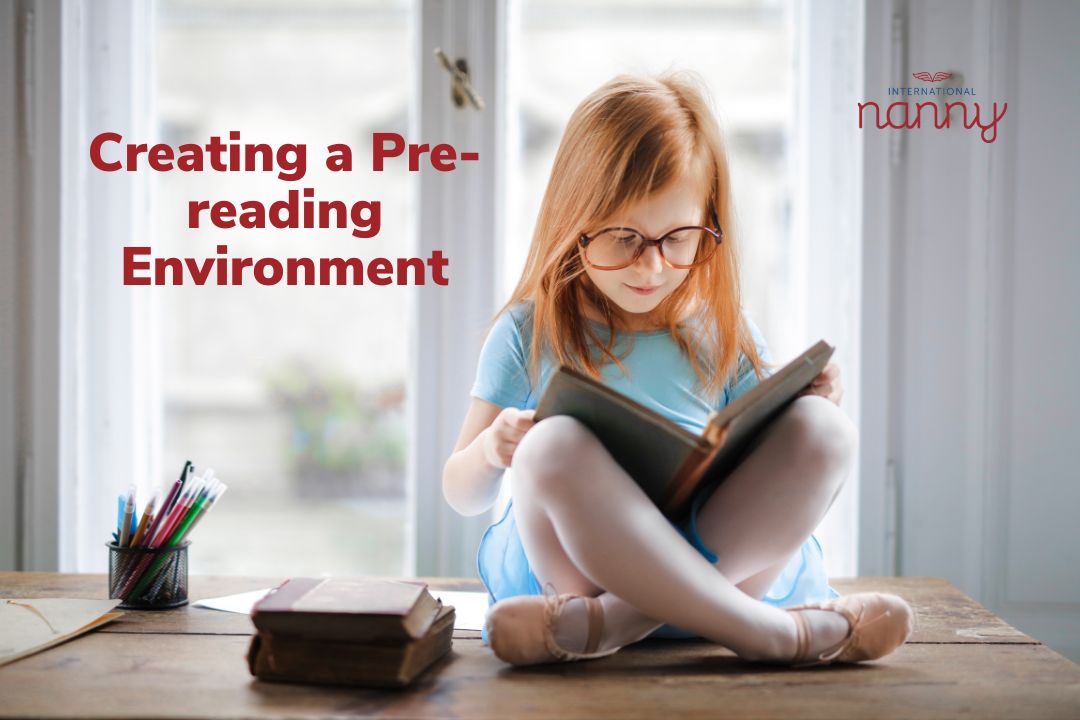
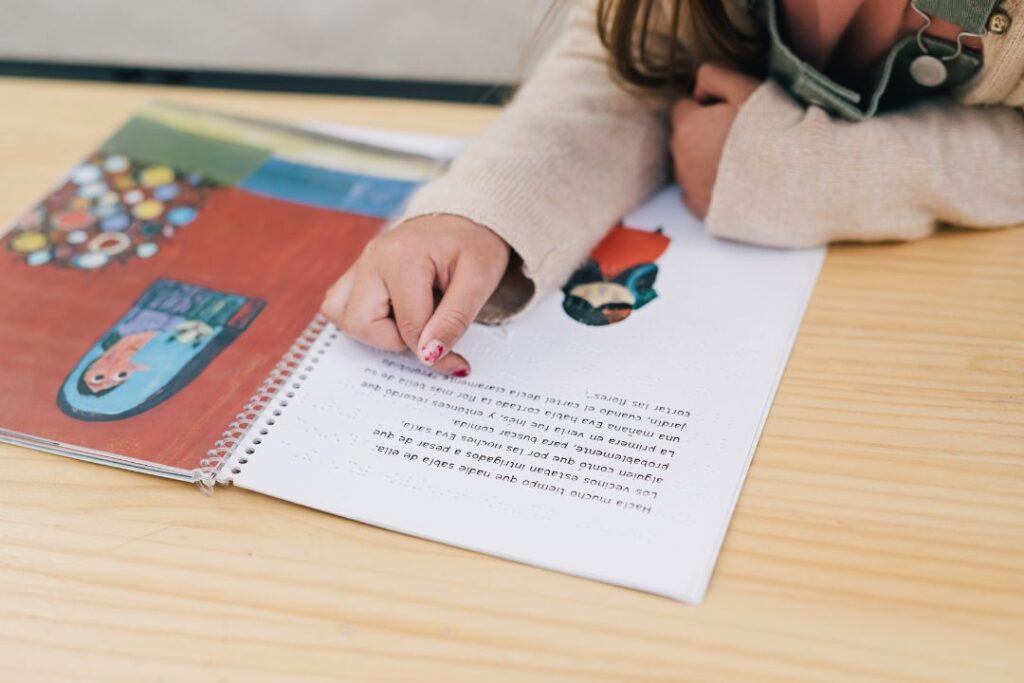
Creating a Pre-reading Environment

As a nanny, you have an incredible opportunity to help introduce young children to the joys of reading. Reading is a critical skill that lays the foundation for success in both the academic and personal lives of children. By creating a pre-reading environment in the family home, nannies can help set children up for a lifetime of learning, curiosity, and exploration. In this article, we will explore tips and strategies for nannies to help toddlers and young children get excited about reading and create a pre-reading environment in the family home.

Benefits of Reading to Toddlers and Young Children

Creating a Pre-reading Environment

As well as the obvious benefits of boosting children’s ability to read when the time comes and providing a pleasurable pastime, there are many benefits of promoting pre-reading skills which impact on  children’s overall wellbeing and different areas of development. Here we explore some of those:

Enhances Language and Cognitive Development

Reading plays an essential role in the language and cognitive development of young children. It exposes them to a broad range of vocabulary, sentence structure, and syntax, which helps build their language skills and comprehension abilities.

Develops Imagination and Creativity

Reading provides an escape from reality and opens up new worlds of imagination and creativity. It allows children to explore new ideas, places, and perspectives, nurturing their minds with a deeper understanding of the world around them.

Creating a Pre-reading Environment

Cultivates Critical Thinking

Reading promotes critical thinking and problem-solving. Through reading, children learn to analyse information, draw conclusions, and apply knowledge to specific situations, all of which are critical analytical skills that will benefit them throughout their lives.

Sparks Curiosity and Love for Learning

Reading helps foster a love for learning and a thirst for knowledge in children. It encourages them to explore new interests and topics, expand their minds, and pursue lifelong learning.

How to Create a Pre-Reading Environment in the Family Home

Nannies have the unique position of providing children with early care and education in a home environment. There are many ways that the home environment can be leveraged and enhanced in order to support pre-reading skills. These are some of the ways that nannies can create a pre-reading environment in a family’s home.

Provide Age-Appropriate Books

Provide age-appropriate books for children to read, engage and immerse in stories. Ensure that you have a variety of books that cater to different interests, reading levels, and genres to promote curiosity and exploration.

Create a Dedicated Reading Space

Creating a dedicated reading space in the home helps to set the tone for reading as a consistent activity. The reading space can be cosy with colourful pillows, comfortable chairs, or bean bags in a quiet and well-lit room, warding off distractions and maximising the reading environment.

Creating a Pre-reading Environment

Read Aloud

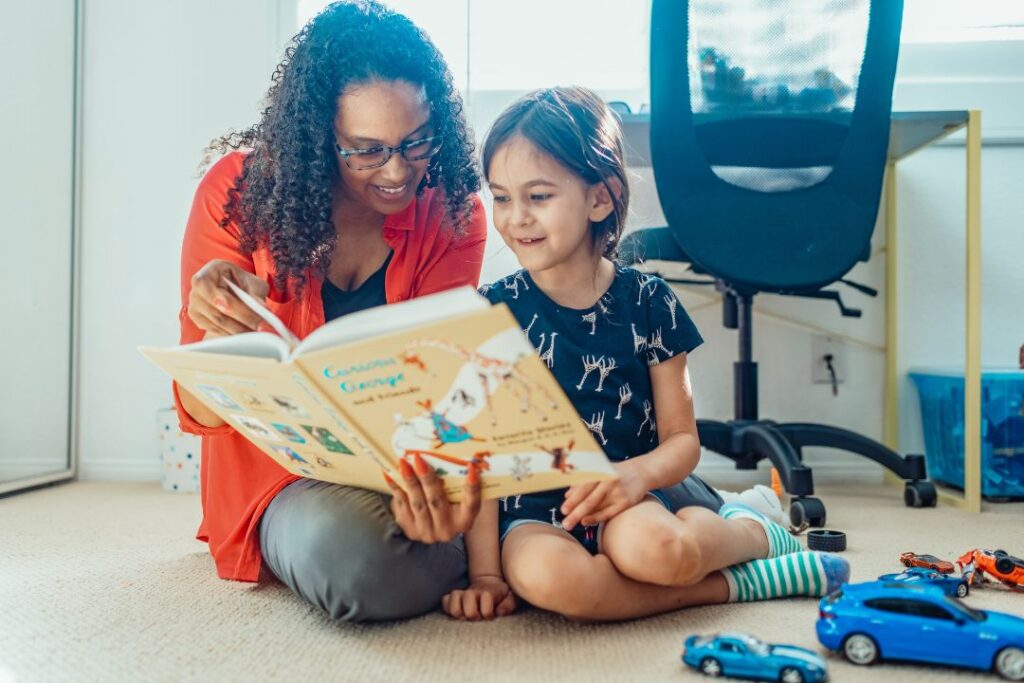
Reading aloud to children helps develop their language skills, increase their vocabulary, and develop their comprehension and critical thinking skills. Encourage and engage children to participate in the reading process by asking them questions and allowing them to interact with the story.

Set a Positive Reading Example

As a nanny, setting a positive reading example within the family is crucial! Children tend to be influenced by the behaviours of their caretakers, seeing them reading and enjoying books helps encourage children to become avid readers themselves.

Creating a Pre-reading Environment

Encourage a Love for Libraries

Visiting the library is a perfect way to show children the world of literature, offers access to an abundance of books, and is an excellent way to expose young children to the world of literature. Encouraging visits to the library, borrowing books and attending library programmes can further foster a passion for reading in children.

Make It Fun

Making reading fun is the key to keeping children engaged and excited about it. Incorporating fun activities like puzzles and colouring pages related to the books they’ve read, costumes or acting out scenes from books, and drawing and writing their own stories based on their favourite books, all of which promote imagination and creativity in children.

Activities to Encourage Reading in Young Children

Creating a Pre-reading Environment

If you would like to plan and carry out some specific activities to support children’s pre-reading skills in your role as a nanny then here are some good ideas:

Role-playing and Storytelling

An excellent way to engage children in reading is through role-playing and storytelling. Encouraging children to act out scenes from their favourite stories, or even create their stories, helps them to develop their imagination and helps in language development.

Library Scavenger Hunt

Going to the library and organising a scavenger hunt can help children discover new books and exploration of the library while having fun. Children can search for specific books, and find different genres of books, topics, or authors, to promote curiosity and exploration.

Educational and Interactive Apps

Interactive and educational apps for phones or tablets can be a fun and engaging way to introduce new stories and promote reading skills. There are various reading apps available that help children improve their reading skills, vocabulary, and comprehension abilities while making learning fun.

As a nanny, creating a pre-reading environment in the family home is a crucial step in fostering a love for reading in toddlers and young children. By providing age-appropriate books, creating a dedicated reading space, reading aloud, setting a positive reading example, encouraging a love for libraries, and making reading fun, nannies can ignite the spark of curiosity and imagination in children. Engaging in activities like book clubs, role-playing and storytelling, library scavenger hunts, movie nights, audiobooks, and educational apps can further enhance the reading experience for young children.

By investing in developing literacy skills, nannies can help set the foundation for a lifetime of learning, encourage critical thinking and imagination, and help preschoolers and young children become well-rounded individuals. This is a vital part of your role when working as a nanny. If you want to become more confident and knowledgeable when supporting children’s development in a range of different areas, our Early Years Childcare course will help you gain insight into the different areas of learning and how these can be supported at various ages and stages of development. Visit us today at www.international-nanny.institute to learn more.

International Nanny Institute

Essential Qualifications for Becoming a Governess in a Private Household

A career as a governess in a private household can offer exciting opportunities, intense challenges and requires a specific set of skills and qualifications. The unique blend of childcare, teaching, and administrative duties associated with the job makes it a rewarding yet challenging career choice. In this section, we will highlight the top essential qualifications that anyone desiring to become a governess must have.

Education Qualifications

Becoming a Governess in a Private Household

Education qualifications are a fundamental requirement for anyone seeking to become a governess. Most private families prefer that their governess has a minimum of a Bachelor’s degree in Early Childhood or Education fields or similar. In specific cases, families seek governesses with degrees in Psychology, Language, and other related fields or postgraduate-level training.

Some families are open to considering those with vocational qualifications demonstrating excellence in their fields, specifically in music, sports or the arts. The idea is to ensure their children receive instruction from someone with skills and expertise that can be acquired through focused education or training.

Childcare Experience

Childcare experience is necessary for anyone aspiring to become a governess, and families prefer a working experience that can be backed up by references. Some families may specify a minimum year of working experience as a nanny, primary/secondary school teacher, education support officer or working as teaching assistant. The priority of the employer is to fill the post with someone who has had experience in how important it is to help children learn and grow, as well as someone who has provided outstanding care in the past.

Language Capabilities

Becoming a Governess in a Private Household

Having a multilingual skill set is a wonderful advantage for anyone interested in becoming a governess. Being able to speak, read and write in multiple languages can be a key factor in ensuring that communication between the governess, children and family members is up-to-standard. Being able to communicate with children in their native language can help the children feel comfortable and support their educational and social growth.

Deportment and Etiquette

Governesses usually work in high-class private households where deportment and etiquette are essential. Hence, families prefer hiring someone who has impeccable manners, speaks correctly and eloquently, and is cognisant of social expectations. It is important to note that most families prefer a governess with some formal etiquette training and protocol to ensure these principles are passed down to the children they serve.

IT and Technology Proficiency

Becoming a Governess in a Private Household

Technology is becoming more prevalent in education and childcare, making technology skills a crucial part of career development for governesses. Governesses must be competent in computer skills, able to operate multimedia teaching aids and programs that support online learning or assessments applicable to the children’s education. They may also be required to manage household and travel expenses or use apps to track children’s schedules and achievements.

Inoculations and Health Certificates

As governesses may be travelling to different locations, vaccination certificates are often required to ensure their health and that of the children are safeguarded. Hence, having updated medical reports with an excellent health track record is essential. Employers also require candidates to provide evidence that they are physically fit and can handle the responsibilities of caring for children.

While the list of essential qualifications for becoming a governess may seem extensive, individuals who meet these qualifications will thrive in a private household environment. With a bachelor’s degree in education, childcare experience, fluency in multiple languages, IT skills, excellent manners and protocols, and good health is a winning combination that will place you in high demand. Becoming a governess requires patience, flexibility, great communication skills, and a desire for continued educational and professional growth. However, for those who have a genuine passion for childcare and education, and are willing to invest their time and efforts, becoming a governess can be an immensely fulfilling, worthwhile and rewarding career option.

If you’re interested in exploring the different roles that are available in the home-based childcare sector then our course Working as a Nanny is for you, here you will learn more about the roles and responsibilities of different posts and develop the skills needed for looking for and securing a job, and for communicating with parents, so you can get your career off to a great start!

International Nanny Institute

Volunteering

Volunteering is a great way for children and teenagers to give back to their communities, learn new skills, gain valuable experience, and develop a sense of social responsibility. Getting children and teenagers involved in volunteering can be an excellent opportunity for them to connect with others and appreciate the benefits that come with helping others. In this article, we will discuss the benefits of volunteering and ways to get children and teenagers involved in volunteer activities with the help of professional nannies.

Volunteering

Benefits of Volunteering for Children and Teens

Most of us would agree that volunteering is an extremely worthwhile activity, and it also has a whole host of benefits for children and teenagers. Here we look at the ways that getting involved in voluntary work can benefit children and teens in various areas of their lives:

Develops a Sense of Purpose and Social Responsibility

Volunteering can be an essential catalyst for children and teens to develop a sense of social responsibility and purpose. By being a part of any volunteering activity, whether it is at a local food bank, animal shelter, or hospital, children and teenagers understand the benefits of giving back to the community, and in turn, it can give them a sense of fulfilment.

Helps Build Confidence and Self-Esteem

Children and teenagers who engage in volunteer activities learn new skills and gain valuable experience, which can help them build their confidence and develop a sense of self-esteem. As they work alongside other volunteers, they can develop positive relationships, which in turn can foster their social and interpersonal skills.

Provides Opportunities for Skill Development

Volunteering provides children and teenagers with many opportunities for skill development in areas like communication, leadership, teamwork, and time management. These skills can be extremely beneficial not only when they volunteer but also in future career opportunities.

Helps Foster an Open-Minded Approach

Volunteering can expose children and teenagers to new cultures, people, and experiences outside their immediate community. This exposure can help foster an open-minded approach to life and broaden their perspective of the world.

Promotes Physical and Mental Well-being

Volunteering can help promote physical and mental well-being, as it gives children and teenagers a sense of purpose and achievement, leading to better emotional health. When children and teenagers are involved in volunteering, it can also lead to physical activity, which can promote a healthy lifestyle. For example, many teenagers will take on the role of a junior sports coach, helping younger children in their chosen sports.

Volunteering

Ways to Get Children and Teens Involved in Volunteer Activities

You may be wondering where to begin with getting children and teenagers involved in volunteering opportunities. The first step should always be a discussion around what they would like to do, and then you can find opportunities that fit with this. Following this, these other tips can be applied:

Start Close to Home

Volunteering doesn’t always have to be far from home. Look around your community, and you’ll find a variety of organisations that need volunteers, such as charity shops, schools, and animal shelters. Reach out to these organisations and find out what opportunities they have available for children and teenagers to volunteer.

Use Online Search Tools

Online search tools are useful resources for finding volunteer opportunities near your area. There are many websites such as Volunteer Match, or Do-it.org which can help you find volunteer opportunities that suit children’s and teenagers’ interests, schedules and strengths. In the UK, 16 or 17 can take part in the National Citizen Service (NCS) or complete the Duke of Edinburgh Awards, and other countries may have similar schemes.

Encourage Volunteering With Friends 

Volunteering

Encouraging children or teenagers to volunteer with their friends can make the experience more enjoyable and rewarding. Volunteering is an excellent activity for groups and can any day become a great bonding experience for friends who have common values and interests.

Get Involved in Environmental Conservation

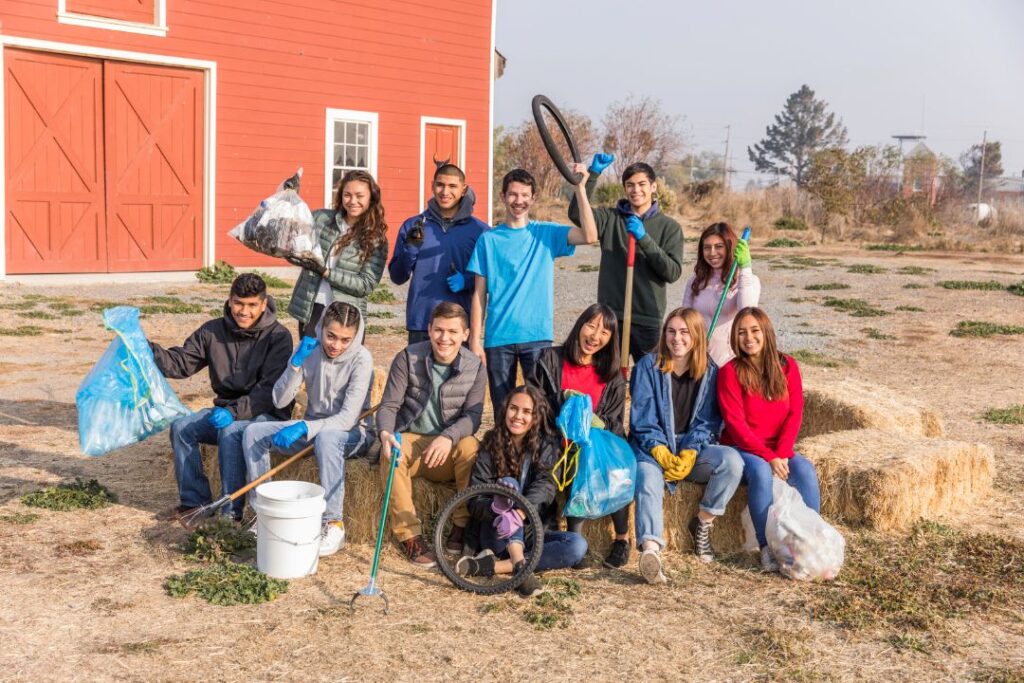
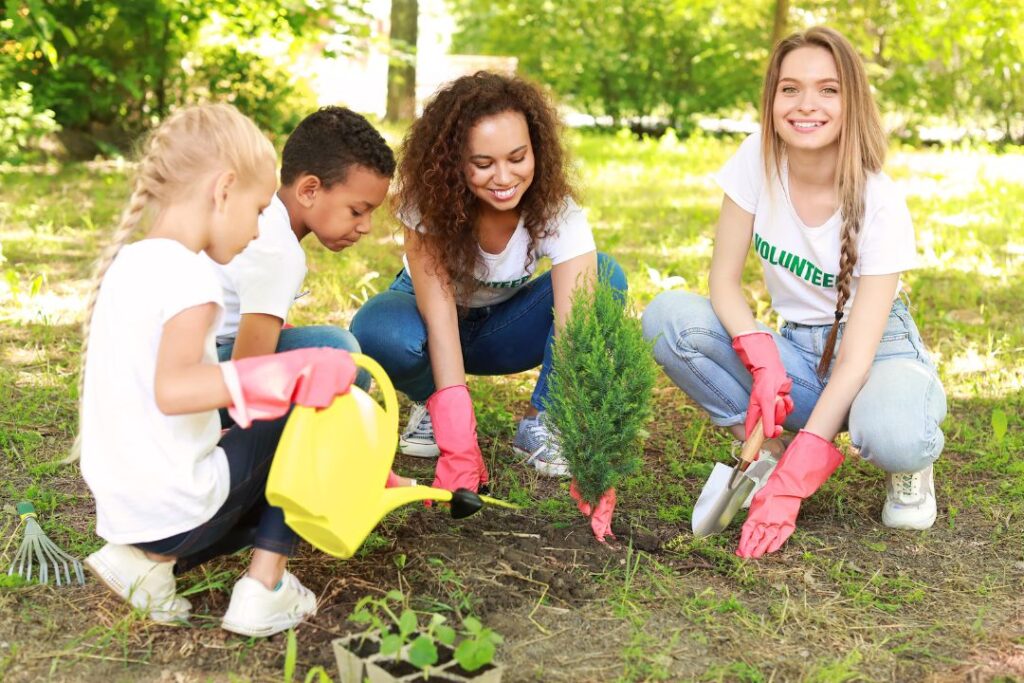
Environmental conservation is an issue that affects everyone, and volunteering helps children and teenagers understand the importance of protecting the environment. There are several organisations working on environmental conservation like beach clean-ups or tree plantation, and participating in such events can offer enormous personal satisfaction and improve our surrounding environment.

Get Involved in Fundraising and Charitable Drives

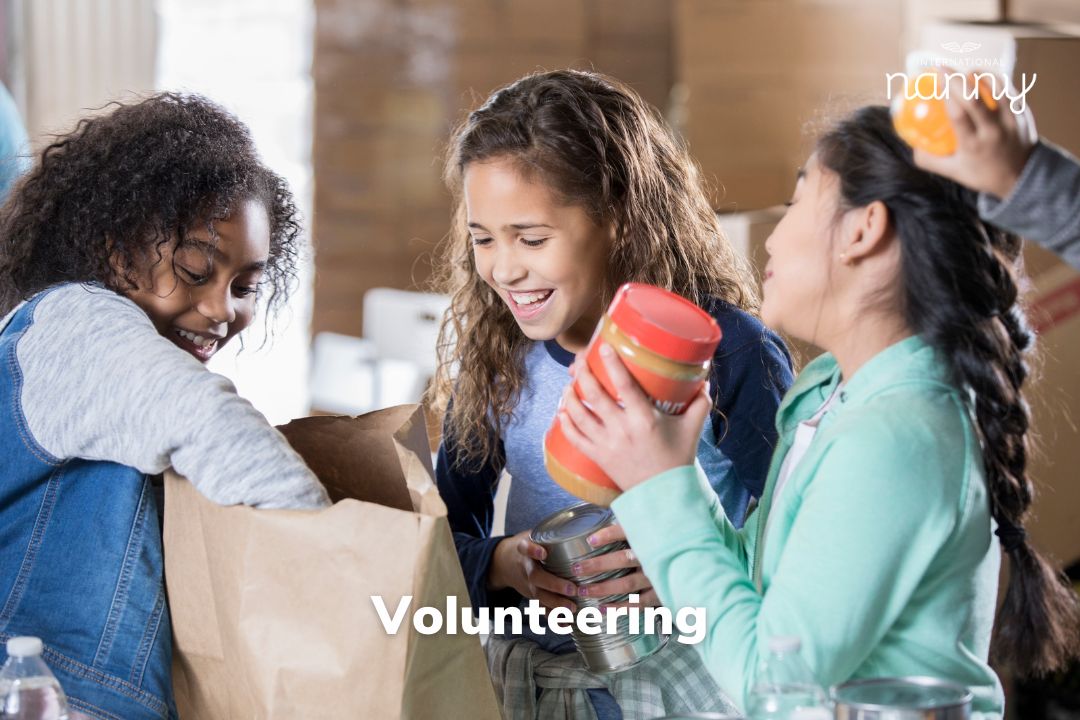
Fundraising or charitable drives are an excellent opportunity for children and teenagers to volunteer their time, talent, and resources. Whether it is a food or clothing drive, children and teenagers will be actively involved in the organisation and planning of the event and can gain valuable experience as they work towards a common goal.

Whilst it is important that children and teenagers take ownership of their volunteering, adults play an important role in guiding them. This can be done by teachers and parents, but also by nannies, who have a great deal of influence in the families they are employed by.

How Nannies Can Encourage Children and Teens to Volunteer

Nannies play a central role in the lives of the children and teenagers they take responsibility for, making it essential for them to encourage their charges to volunteer, here are ways they can do so:

Volunteering

Highlight the Benefits of Volunteering

Nannies can highlight the many benefits of volunteering, such as skill development, community service, and personal fulfilment, to encourage their charges to engage in volunteer activities.

Match Volunteer Opportunities with Interests

Nannies can help their charges to identify volunteer activities that match their interests and passions. For example, if a child is interested in animals, nannies can research animal shelters in their area and suggest volunteering in such organisations.

Plan Volunteer Activities Together

Nannies can plan volunteer activities with their charges to help develop a sense of ownership and responsibility. By encouraging young volunteers to be proactive, they are more likely to stay committed and improve their chances of gaining maximum benefits from volunteering.

Celebrate Achievements and Success

Nannies can celebrate their children and teenagers’ achievements and successes by recognising their contributions and positive impact on the community. Such celebrations help to reinforce the value of volunteering and encourage a culture of service among children and teenagers.

Getting children and teenagers involved in volunteering not only benefits them as individuals, but it also helps in building an empathetic society where we routinely think of others, are socially responsible and community service and contributing to charitable causes becomes a part of everyday life. Nannies who encourage children and teenagers to volunteer will be setting them up for success in life by developing valuable skills, social consciousness, and a sense of responsibility towards their communities.

Parents should keep this in mind when they are hiring professional nannies, and aim to find someone who shares the same values and understands the importance of community development. Volunteering is a rewarding and fulfilling experience for children and teenagers, and by promoting this activity, we can build a better future for them and the society they live in.

Navigating Adolescence

Enrolling in our online course Navigating Adolescence could be the perfect way to take your career to the next level. With the knowledge and skills gained from this course, you could help guide children and teenagers through the challenging but rewarding journey of adolescence. By learning about the developmental stages, communication techniques, and problem-solving strategies, you will be able to provide crucial support to young people as they navigate the complexities of growing up. Whether you are a nanny or a teacher, this course will help you to become an even more effective caregiver and mentor. So, why not invest in your career and enrol in Navigating Adolescence today? Find out more at Navigating Adolescence or visit us at www.international-nanny.institute now!

International Nanny Institute

Swimming Pool Safety

Swimming pools are a great source of outdoor family fun, and young children enjoy splashing around in the water. However, as enjoyable as it is, the safety of young children around the pool cannot be overstated. As a nanny responsible for child care during summer, you must prioritise swimming pool safety to prevent drowning, and injuries and ensure that children have a safe and enjoyable swimming experience. In this blog post, we will discuss back garden pool safety tips designed to protect young children and ensure a secure poolside environment.

Pool Fencing

Installing pool fencing around the pool area should be a priority for parents and homeowners. This helps restrict access to the pool area, preventing young children from wandering unsupervised. A high fence of over four feet is recommended to prevent children from climbing over it, and the gate should be self-closing and self-latching mechanism that fastens securely when closed.

Swimming Pool Safety

Install a Pool Cover

A pool cover is essential in ensuring the safety of young children around the pool. A sturdy hard-cover pull lid or mesh cover should be in place when the pool is not in use. This ensures that toddlers and young children are kept safe, even if they accidentally wander to the pool area unattended. A pool cover also helps to keep the pool cleaner, reducing debris and maintenance.

Use Pool Alarms

When it comes to pool safety, having an alarm in place is a step in the right direction. Pool alarms should be placed in the pool itself and on the fence gate, alerting adults when a child approaches the pool without supervision or if they accidentally fall into the pool. These alarms can be found in different forms and include motion sensors, sound alarms, and wave detection devices.

Swimming Pool Safety

Invest in Swim Aids

Investing in swim aids such as swim vests, aid floats or armbands provides an extra layer of protection, especially for younger children. These swim aids hold children above water level, allowing them to move and swim independently of adults. They provide an additional level of security for young children in the pool, allowing them to play and splash around safely.

Supervision

The absolute most crucial aspect of pool safety is adult supervision. Toddlers and young children should always be accompanied by an adult when around the pool. This means constant supervision, avoiding phones and distractions. Adults should never leave young children unattended near a pool, regardless of how brief your leaving may seem.

Swimming Pool Safety

Teach Swim Safety

It is essential to teach young children about water safety and the pool rules before allowing them to swim. Ensure that they are aware of the dangers around the pool and the rules around swimming. Communication is an essential tool in encouraging children to prioritise their safety while they swim.

CPR Training

Having CPR training is an essential skill for anyone supervising children around the pool area. Knowing how to perform CPR can be lifesaving, especially in the event of a pool accident. Nannies and parents should take the time to enrol in CPR classes to ensure they have this essential and lifesaving skill.

Remove Toys from Pool

It’s essential to avoid leaving toys in the pool after use, as they may attract young children or toddlers to the pool. These toys can also be a choking hazard to toddlers, and their presence can encourage small children, even those who cannot swim or stand, to enter the pool area. Always ensure that pool toys are removed and stored safely after use.

Check Water Quality

Swimming Pool Safety

Maintaining a pool regularly involves testing and treating the pool water using the appropriate chemicals. However, pool owners should also ensure that the pool’s chemical balance is appropriate for swimming that can harm young children, such as high chlorine levels, can cause harm. Regularly testing the water’s cleanliness and maintaining the pool equipment will benefit young children and ensure a safer swimming experience.

Swimming in a back garden pool can be fun and enjoyable, and as nannies responsible for children, ensuring their safety around the pool is critical. Installing pool fencing, pool alarms, and covers, investing in swim aids, constant adult supervision, teaching swim safety, learning CPR, removing toys from the pool, and checking water quality are essential steps in ensuring peace of mind for parents and a safe and enjoyable swimming experience for young children. By following these tips, nannies can play an essential role in creating a pool-safe environment for young children. Regardless of the season, keeping children safe around the pool is an active and shared responsibility among adults.

For more safety tips, including safety around the home and safe driving practices, check out our Caring for Children course. This course will improve your knowledge and confidence in looking after children in a home-based role. If you’re looking to become a nanny or develop your skill set as a nanny, knowledge is power! Find out more about our Caring for Children course and our other offerings at www.international-nanny.institute today!
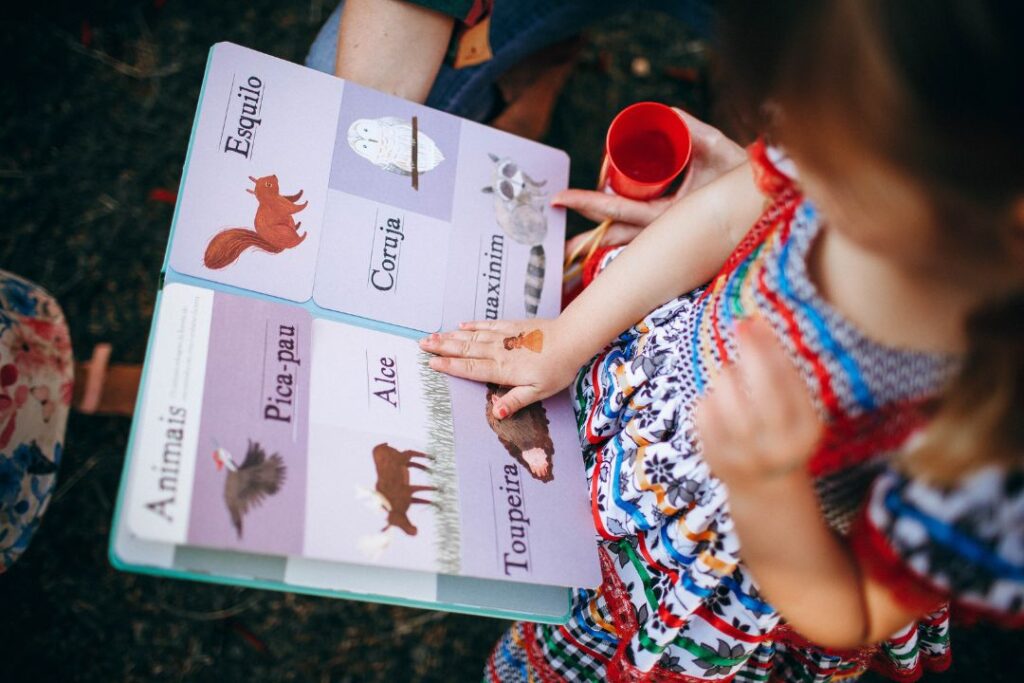
Natural Sleep Rhythms for babies, toddlers and young children  

Sleep seems to be one of the hot topics of parenthood, and with good reason; we all need sleep to be happy, healthy and functional and so do children.

Nannies are often asked for advice and support with children’s sleep, so it’s important to be educated on what is normal, and expected and how we can support families to get the sleep that they need.

Sleep is especially important for children in the early years of life who are in a stage of rapid physical and cognitive growth, but their sleep doesn’t always look like we expect it to or fit neatly with their parents’ sleep needs, and this can be both tiring and frustrating.

Humans’ natural sleep rhythms change throughout our lives, so it’s unlikely that a baby, toddler or young child is being deliberately difficult, or that anything is ‘wrong’ with them or their sleeping habits. It’s more likely that their natural sleep rhythm, or ‘body clock’ is simply out of sync with the needs of the adults in their lives.

Here we explore natural sleep rhythms at different ages and what we, as nannies, can do to ‘hack’ these to support parents and get the most out of children’s sleep patterns.

What is the body clock?

Sleep tips for babies, toddlers and young children

The body clock is a term that we often hear as adults and a great example of how the body clock works can be seen when we consider how older adults who have spent their working lives waking at 7 am to get ready for work find that in retirement they continue to wake naturally around 7 am even though they don’t need to.

When we repeatedly wake up at the same time for work or school, our bodies fall into a rhythm of wake and sleep that coincides with this.

This is often referred to as ‘the body clock’ and it’s why we experience jet lag when travelling because when we travel to different time zones our bodies are forced into waking or sleeping at different times to those they have come to expect.

What is the science behind this?

Natural Sleep Rhythms

Behind the experience of the ‘body clock’ there are two bodily systems that largely regulate our sleep. These systems are the circadian biological clock and sleep/wake homeostasis. These two systems together mean that we experience fluctuating levels of sleepiness and alertness throughout the day and night.

Sleep/wake homeostasis is the system that helps us to feel sleepy and sense the need to sleep at night to make up for our activities during the day. This system is designed to balance our sleep and wakefulness.

The circadian biological clock, on the other hand, is responsible for regulating the timings of alertness throughout a 24-hour period. This means that we often have periods of higher and lower alertness as we go through the day and night.

For adults, the pressure to sleep is greatest between 2 and 4 am, and between 1 and 3 pm. When we are sleep-deprived, the urge to sleep in the afternoon is much stronger, but when we are well-rested we may not even notice this.

Natural sleep rhythms for newborn babies

Natural Sleep Rhythms for Babies

As nannies, when we hear the phrase “sleeping like a baby” we can conclude that whoever invented this phrase, probably didn’t have a baby.

Newborn babies, from 0 to 3 months, typically don’t have great nighttime sleep, instead for newborns, sleep can occur day or night, and most newborns will total about 18 hours of sleep in a 24-hour period.

However, this doesn’t always occur in long blocks or exclusively at nighttime, and plenty of babies have their day and night muddled up!

Most babies need to learn the difference between daytime and nighttime, and set their circadian biological clock to meet their sleep needs.

However, newborns can’t be forced to sleep at the right time. Instead, nannies can support parents by gently encouraging newborns to differentiate between day and night.

One way to do this is to make daytime and nighttime very separate experiences; The daytime should be light and bright with all the usual comings and goings of the day, plenty of natural light in the house, and lots of interaction.

Taking a walk outside during the day will also help as even at this age exposure to different amounts and types of light affects the hormones that our bodies produce. 

Evening and nighttime on the other hand should be dimly light, and quieter with less playful interaction. This helps the body to produce melatonin, which makes humans feel sleepy.

Natural sleep rhythms for infants

Natural Sleep Rhythms for toddlers

Most nannies are familiar with, or have at least heard of, the 4-month sleep regression.

Around this time, babies will typically become more aware of their surroundings and find it more difficult to get to sleep as they are busy finding out more about the world.

This stands at odds with the fact that they still need plenty of sleep and will need to take up to 4 naps a day, gradually decreasing to just 1 or 2 as they approach their first birthday.

Some babies may begin to sleep through the night during this period of time, but this is not a universal trait, and the majority of babies still wake for feeds throughout their first year.

This is normal and a protective factor against SIDS.

In fact, humans used to have a period of time awake in the middle of the night, with 2 blocks of sleep either side up, so sometimes we see this evolutionary hard-wiring reflected in infant sleep patterns.

This can be difficult for parents to deal with, so nannies must work hard to reassure parents that this is very normal and that it is not their fault.

Natural sleep rhythms for toddlers

Natural Sleep Rhythms for toddlers

Toddlers, from about 1 to 3 years old, need about 11–14 hours of sleep per 24-hour period, but this won’t occur as one solid block of sleep, so napping in the afternoon is still important at this stage.

Having a nap in the afternoon works with the circadian biological clock, as it is around this time that we experience natural sleepiness.

An afternoon nap is a simple way to make sure that toddlers are getting the rest they need without the pressure to sleep in a huge block at night.

The nap should occur as close to the same time every day as possible to help set and keep a regular circadian biological clock.

Nannies can help parents to set and maintain a solid nap schedule to ensure that children are getting the sleep they need.

Natural sleep rhythms for young children

Natural Sleep Rhythms for young children

Between the ages of 3 and 5 young children need to sleep between 11 and 13 hours.

This might all happen at night, or they may maintain an afternoon nap, though this gradually gets shorter and generally stops before age 5. This age group is particularly sensitive to different colours of light, so this is a good way that nannies can help parents to ‘hack’ preschoolers’ sleep rhythm.

Blue light such as that from a computer, tablet or television screen can cause wakeful hormones to rise and make it more difficult for young children to sleep.

Nannies can ensure that screens are limited in general, but particularly in the hour before bedtime, in order to help young children to fall asleep more easily.

The blue light filters on devices can also be used to help keep blue light to a minimum throughout the day.

Nannies may also be familiar with the concept of ‘bedtime protest’, which is particularly characteristic of this age group and is where children refuse to go to bed at the time set by parents; this might result in children having tantrums, becoming very distressed or simply exhibiting challenging behaviour.

Some of this is likely to be a boundary-pushing behaviour, but it may also be the effect of the inbuilt circadian biological clock conflicting with modern or cultural schedules.

For example, whilst many societies expect children to go to bed at about 7 pm, other cultures, like that in Spain, allow children to stay up much later and enjoy extra time with the family whilst having an extended sleep in the afternoon called ‘siesta’.

However, since other societies are arranged to have children awake during the majority of the day and asleep all night ready to wake early, adjusting their biological circadian clock to be more compatible with our needs and expectations may be necessary.

Some of the tips here may be helpful, or you may want to check out our blog post on sleep tips to help babies, toddlers and young children to get a good night’s sleep.

International Nanny Institute

You may also be interested in

How nannies can encourage children’s independence

Maria Montessori encouraged adults to “never help a child with a task at which he feels he can succeed” as she had observed that often adults stifle children’s emerging independence by jumping in to ‘save the day’.

Unfortunately, not only does this rob children of the chance to try and to persevere, but it also gives children the message that they can’t do things and they need adults to help them with everything.

Whether the family you are working with has explicitly stated that they want you to use a Montessori-style approach with the children, or you just see value in promoting independence, there is plenty that you can do as a nanny that can help children to develop these self-help skills.

So, if you would like to encourage children’s independence at home, here are some good starting points;

Acknowledge children’s attempts at independence

encourage children's independence

Often we are in a hurry to get out of the door, and see the child having a tantrum about wanting to put on their own shoes as being “difficult” but if we step back and consider what is going on a little more carefully we will realise that the child is expressing a sense of frustration that we are preventing their attempt at independence.

Taking a step back, and acknowledging that this is what is going on is a great place to start thinking about how you can set up the home, and your routines with the children to allow for this growing sense of independence.

It is also worth noting here that most tantrums are a toddler or child’s manner of expressing frustration at boundaries, and lack of independence. This does not necessarily mean you should remove or reduce your boundaries; just that you should consider how you are acknowledging children’s feelings for what they are.

Creating a ‘yes’ space

Often we limit what children are allowed to do based on safety concerns, or worries about the mess and tidying up.

For example, you may tell a 3-year-old that no, they can’t play with their dolls in the lounge as it will make a mess, and no they can’t throw the frisbee inside the house as they may break something, and no they can’t jump around the house like a power ranger or a fairy or a superhero because they may hurt themselves.

Before you know it you’ve spent the morning telling them ‘no’, and if anything will frustrate a growing sense of independence it’s the word ‘no’.

As a nanny this can be a difficult line to tread when working with parents, as ultimately the house belongs to them, however, it is certainly something that could be discussed tactfully if you feel that too many rules are starting to affect a child’s growing sense of independence.

To combat this it may be a good idea to negotiate being able to set up a ‘yes’ space in the home; this might be a playroom, the child’s bedroom, or a play area.

The idea is to set the space up to be safe enough that you, as the caregiver, do not need to constantly say no. Montessori classrooms are largely yes spaces; somewhere that you can trust children to play independently and stay safe.

Encourage children’s independence with words 

encourage children's independence

What we say and how we say it can make a huge difference to children.

As we already discussed most children want to be independent and become frustrated when they are not allowed to be.

When we verbally permit, encourage and celebrate children’s attempts at being independent we validate them, and when children feel validated in their attempts at independence, they are more likely to persevere with what they’re trying and eventually succeed. 

As a nanny, you can try saying things like “You have a go” or “keep trying” to children.

You can praise the effort by saying “You’re working so hard at that” or “great trying” and acknowledge success with “well done, I knew you could do it!”

Use mealtimes as an opportunity

Meal times with little ones are a common source of stress, but they can be a great opportunity to build independence and self-help skills.

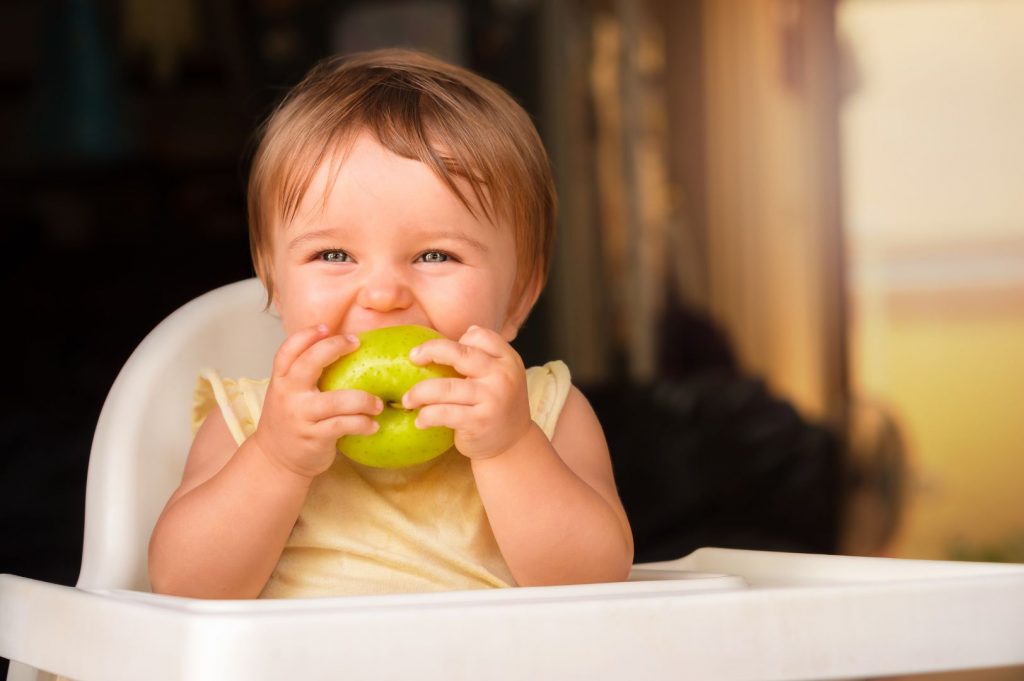
Even young babies (so long as they are over 6 months) can feed themselves at the table and using a baby-led weaning approach is a great way to promote that early independence, as a nanny this is something that can be discussed with parents.

encourage children's independence

For older children, encouraging children to serve or even help prepare their food, and pour water from a jug enhances their balance, dexterity and hand-eye coordination.

This also helps to divide responsibility at mealtimes which are perfect for promoting independence.

As a bonus, children tend to eat a wider variety of food when they select it themselves.

Avoid wardrobe battles

encourage children's independence

Children are often keen to select their own clothing and dress themselves, although their fashion choices can be questionable at times, allowing them to make attempts at dressing will pay off in the long run.

If a child’s choices are likely to be unsuitable for the day’s activities or the weather you could decide on an outfit together perhaps the night before and lay it out for them to put on themselves in the morning.

Younger toddlers and babies can be encouraged to lift their arms to put on a shirt or raise their feet to put on shoes and socks.

Use your best judgment as to when a child may be able to attempt dressing alone and remember, that wearing a tutu over a raincoat is not the end of the world.

Make sure children contribute

Involving children in running the household from a young age is great for promoting independence and also demonstrates their role in the family and enhances their sense of belonging.

It builds an understanding of working as a collective and is something that is highly emphasised in educational approaches like Montessori.

encourage children's independence

This is not to say that children need to be doing housework all day long, but small contributions add up and will help promote children’s independence too;

Little babies can be encouraged to help put their toys away in a box when they have finished playing, or wipe the highchair tray when they are done eating.

Toddlers generally love to help around the home and can use a small dustpan and brush or a handheld vacuum to clear up.

Matching socks and sorting laundry are also valuable learning opportunities for preschoolers and will help children to feel involved in the running of the home.

Encourage risk-taking

As nannies, it’s our job to keep children safe, but sometimes we can become overly worried about this responsibility and as a result, we can become very overprotective of our charges and actually hold their development back by doing so.

Healthy risk-taking is vital for children’s emerging sense of self because where there is a risk of failure, success is more valuable.

Allowing children to climb, run and jump and explore their limits is essential for the growth and development of independence, so we can consider ways to allow for healthy risk-taking that promotes children’s physical skills and sense of independence.

International Nanny Institute

We hope that some of these ideas will help you consider how to approach encouraging children’s independence.

To find out more about the natural pattern of Children’s development and how and when to support their growing independence sign up for our Child Development course.

Not only will this boost your confidence in working with children in an age-appropriate manner, but it will reassure families that you have the expertise in childhood and early years.

You may also be interested in

Great sleep tips for babies, toddlers and young children

Sleep is one of the biggest concerns reported by parents with young children and one of the most common reasons that parents seek help and advice from their nanny.

It’s not hard to see why this might be; taking care of small children can be exhausting at the best of times but a lack of sleep or broken sleep makes it even harder and this can really begin to take its toll on families.

Many parents will turn to some of the countless books, sleep training programs and expensive products on the market in order to “train” a baby to sleep for longer stretches so that they can too.

The notion of Sleep Training can be controversial and something that we as nannies should encourage parents to research in-depth for themselves. Here are some tips that might help you to support families to get more sleep.

Have realistic expectations

First and foremost, we need to have realistic expectations! The fact that sleep “issues” are one of the most commonly reported concerns for parents with young children should give a bit of a clue!

Children who wake in the night are the rule, not the exception to it. In fact, most adults don’t “sleep through the night” in a solid 12-hour block, so it’s pretty unreasonable for us to expect children to.

Although it does not make it any easier to deal with a lack of sleep, sometimes reminding parents that night waking is perfectly normal can remove the emotional burden of the situation.

Just like adults, babies, toddlers, and young children wake at night for a wide variety of practical reasons.

They could be hungry, thirsty, need the toilet, be too hot, too cold, have had a bad dream, have a tummy ache, be uncomfortable and so on.

When adults wake for these reasons we are usually able to take some kind of action to fix the problem, for example getting ourselves a glass of water, going to the toilet or calming ourselves down. Babies and small children don’t always have these options so they call out to their caregivers for help.

Sleep tips for babies, toddlers and young children

Some of these problems can be remedied perhaps by leaving a drink near the bed that a toddler can help themselves to, providing extra blankets near the bed for an older child or using a nightlight for little ones who may be scared of the dark.

However, babies, toddlers and young children often need help to meet their needs in the daytime so at nighttime this is no different.

When we think about human history and consider sleep from an evolutionary perspective, it is quite normal for young children to need their parents at night; our ancestors slept communally and shared “watch” duties at night time in order to keep everyone, including babies, safe (Worthman and Melby 2002) Humans’ evolutionary past has left its mark on brain and so is natural and normal for human babies to want to be close to their parents.

With all this in mind, we can approach children’s sleep with a more realistic expectation. We can still try to improve sleep because it is important that parents are able to get the rest they need too, but our expectations may need to be adjusted.

Work with children’s circadian rhythms

Circadian rhythms or the ‘biological clock’ is designed to regulate the timings of sleepiness and wakefulness as we go through 24-hour periods. We looked more in-depth at this in our article on children’s natural sleep rhythms which may also help you to improve your understanding of children’s sleep.

The cycle of light and dark throughout the day and night has a profound effect on our circadian rhythm. In the darker, winter months many adults feel a bit lethargic and down, whilst longer summer daytimes often see children rising far too early. However, if we work with the effects of daylight we can help children and ourselves sleep better during the nighttime.

Sleep tips for babies, toddlers and young children

It is daylight that helps to set children’s natural circadian rhythms and sleep-wake schedules, so using this to our advantage is a way that nannies can support families with babies, toddlers and young children’s sleep.

Exposure to natural light in the daytime, particularly in the late afternoon can help to improve children’s sleep. Nannies can take children outdoors during these times, perhaps on a walk or to play at the park, and monitor whether this makes a difference to children’s sleep.

Avoiding artificial light before bedtime can also improve children’s sleep because blue light, such as that in most of our homes and electronic devices, signals to the body that it’s time to wake up, and it is disruptive to the production of hormones needed for sleep.

For children, many of the nightlights marketed use blue-light, so nannies can encourage parents to consider swapping to a nightlight using red tones of light instead. 

Ensure rich, sensory input throughout the day

Sleep tips for babies, toddlers and young children

When we run around frantically from one activity to the next we are certainly in danger of overstimulating babies, toddlers and young children. Overstimulation gets a lot of press when thinking about children’s sleep.

However, it is also worth exploring whether babies, toddlers and young children are struggling to sleep because they have been under-stimulated. Young children need adequate rich, sensory input during the day in order for them to sleep well at night 

Spend more time outdoors

Sleep tips for babies, toddlers and young children

Spending time outdoors is good for children and adults, and one of the ways that it benefits us is that it promotes good quality sleep.

Along with exposure to natural sunlight, spending time outdoors can help to burn off excess physical energy (even for babies who aren’t walking, as the body will work harder to regulate temperature and so on) and fresh air affects the types of hormones and chemicals in our brains, which in turn can lead to better sleep.

Use the senses

There are plenty of ways to use the senses to help children to fall asleep, and get back to sleep if they wake.

Nannies can help to educate parents on these, and depending on the extent of their role may be able to implement some of these techniques.

We’ve looked at ways to use light to help children fall asleep, but sound can be comforting too; many families have great success using white noise with babies, but toddlers and young children can benefit from white noise, nature sounds, lullabies or audiobooks too. These things can become a signal for children that it’s time to sleep. 

Essential oils can be useful too, perhaps try baby massage, or a foot rub using relaxing essential oils like lavender.

Sleep tips for babies, toddlers and young children

The smell of certain oils can help to relax and calm children ready for bed.

Nannies can also consider the materials that children are sleeping in; pyjamas and bed sheets can make a big difference at this age so can the temperature and humidity in the room.

Here different things will suit different children so you may need to experiment.

Be their village

Sleep tips for babies, toddlers and young children

There is a lot of information available for parents and nannies to weigh up on the subject of children’s sleep. Reframing our expectations of sleep for young children and bringing it in line with what is biologically normal, rather than simply reflecting our cultural expectations can be especially helpful

When we do this, it becomes apparent that most children do not have a ‘sleep problem’, just that biologically normal infant sleep is culturally inconvenient.

In many homes, both parents are required to work outside of the home and run busy lives,  so the focus shifts onto getting the baby to sleep so that normal family life can continue to function.

Humans were never meant to raise children alone, the well-quoted proverb “It takes a village to raise a child” is biologically true. Unfortunately, most parents now find themselves away from family, and lacking a village or tribe to share raising children with.

Nannies, therefore, find themselves acting as a crucial support to families struggling with children’s (albeit normal) sleep patterns and trying to juggle the rest of their busy lives.

You may also be interested in

How nannies can support families to plan healthy, balanced meals

Both nannies and parents want children to be happy and healthy. Most of us understand that nutrition and what we eat plays a crucial role in this.

However, feeding a family can be a difficult undertaking. Many parents are battling with time pressures, the rising cost of living and their own energy levels.

Employing a nanny can be a wonderful support in ensuring that healthy meals are put on the table every week. Sometimes though, lack of inspiration, picky eating or having allergies to deal with mean that it can be challenging to plan weekly menus.

It might be that making the grocery list, doing the grocery shopping or planning the menu is part of your role as a nanny or parents may ask for your input, ideas or support. Here we take a look at what should feature on a family’s weekly grocery list.

Plan healthy and balance Meals

What is healthy eating?

The definition of ‘healthy eating’ is continually evolving in response to new research, as is what is considered to be a healthy diet or healthy eating.

One definition suggests that healthy eating is simply “eating a wide variety of foods in the right proportions, and consuming the right amount of food and drink to achieve and maintain a healthy body weight” but we should also consider that “healthy eating” is about more than just what we eat because how we eat is important too.

Humans naturally have a close relationship with food, not only is it our source of nutrition and therefore vital to life, but it is also part of most societies’ cultural identity and rituals.

Having a good relationship with food is to do with how and why you choose the foods you eat much more than what those foods are.

If you feel any type of shame, guilt, stress, or fear regarding the foods you eat, you may have an unhealthy relationship with food.

As nannies, it is often part of our job to help children to develop a healthy relationship with food.

What is healthy eating for children?

Plan healthy and balance Meals

When we think about healthy eating it’s important to remember that nutritional needs will vary from person to person, and babies, toddlers and children have different nutritional needs to adults.

There are some similarities between the nutritional needs of adults and children as all humans need vitamins, minerals, proteins, carbohydrates and fat. However, these are needed in different amounts depending on age.

Younger children require fewer calories overall. For example, a 1-year-old child should consume about 900 calories per day, but a 14- to 18-year-old needs 1,800 to 2,200 calories, depending on activity level and gender.

Children need to get these calories from a variety of foods too; a child aged 2 to 3 years should get 30 to 35 percent of his calories from fat but by the time we reach adulthood we should only get 5 to 6 percent of our calories from fat.

What are the benefits of healthy eating?

Plan healthy and balance Meals

The WHO states that “Unhealthy diet and lack of physical activity are leading global risks to health” Whilst “a healthy diet helps to protect against malnutrition in all its forms, as well as non-communicable diseases (NCDs), including diabetes, heart disease, stroke and cancer.”

Basically, healthy eating is important because it helps to maintain good physical health, which prevents costs to health services.

Eating a healthy, balanced diet and staying active can also help us to maintain a healthy weight, which in turn helps to prevent health issues!

Deficiencies in some key nutrients can weaken parts of the immune system, making it much easier for us to get ill, so healthy eating helps us to get all the nutrients we need for the immune system to function normally.

Healthy eating helps humans to feel physically and mentally well, and to perform well at school, work and contribute to our communities.

For young children, all of these are benefits in the long term, but in the short term too healthy eating can help small children to grow. Since the early years of childhood are a period of rapid growth this is especially important.

Meal planning

Meal Planning

Meal planning can help to save time, money and disagreements about what to have for dinner, and it is a task that nannies are often assigned and it doesn’t need to be boring, strict or limiting.

Some families really struggle to cook from scratch every night because modern life is extremely busy with after-school activities and homework to complete too, so sometimes we do need shortcuts.

However, we can help to balance those nights where we need to cook a quick, but less nutritious meal with cooking a bigger batch on the days we do cook from scratch and saving a portion to put in the freezer.

This way, when families have a busy night, they can simply pull a healthy meal out of the freezer.

Ingredients to include in a healthy grocery list for families

If you are asked to put together a healthy grocery list for the family you are working for, you should be sure to include foods from the following categories:

Ingredients Plan healthy and balance Meals

Fruits and vegetables

Try to include a portion of veggies or salad as part of the main meals. Fruit can be used as a good alternative to dessert too. Nannies can encourage children to choose fruit or vegetables as a snack by having them prepared and ready to dish out quickly, for example, cucumber and carrot sticks, sliced peppers or prepared mango.

Dairy

Children need to get a bigger proportion of their energy from fats than adults and dairy is a good way for them to achieve this.

Under the age of 2 or 3 children should drink full-fat milk, but semi-skimmed or skimmed are okay once they are older and growing well.

Cheeses and yoghurts are another good way to get more fat into children’s diets along with plenty of calcium, which contributes to strong bones and teeth.

If the children you are caring for don’t tolerate dairy well or their parents choose not to give it, this is not normally a problem, but nannies should seek some advice on how to best ensure that dairy alternatives meet children’s needs.

Carbohydrates

Most western countries suggest basing meals around carbohydrate foods which give us energy, so you should ensure that you keep a stock of rice, pasta or potatoes as the base for meals.

Meat, fish or other protein

Protein foods like meat and fish are important for building muscle, try and choose lower fat cuts where possible as these will be better for the whole family. If the family you work for are vegetarian or vegan you can choose alternative protein sources like pulses, beans or soya and seek out some tasty recipes for these.

Pin Summary

Healthy Living Course. OCN-London and International Nanny Institute

When seeking work as a nanny, being able to provide a healthy, balanced set of meals and snacks is a very desirable skill and many families will include being able to cook nutritional meals as essential criteria for applying to their role.

If you need to learn more about nutrition, healthy eating and a balanced diet, our Healthy Living course can help you with this and ensure that you are a more attractive applicant when applying for new nanny roles.

Sign up today to improve your skills and your confidence in supporting healthy lifestyles for children and their families.

International Nanny Institute

You may also be interested in

A nanny’s guide to making a good first impression

Making a good first impression is really important.

No matter what industry you are in, the way you carry yourself on the first day of work matters.

This is especially true of the nanny industry where your employer is trusting you with their most precious and irreplaceable possession, their children.

Being a nanny on his or her first day of work, you might be wondering if you are ready for your new job, and to work with a new boss.

You might have thoughts like  “Do they still think I’m right for the job?” or “I hope they won’t change their mind” or suffer from imposter syndrome, where you feel out of your depth and hope that no one will find out! All of these things are common, understandable, and completely normal but it’s up to you to overcome them.

In spite of how you may be feeling on the inside, you still need to make the right first impression on the outside. Here are some of our tips for how to do just that:

Dress appropriately

This does not mean that you have to wear your Sunday best. Sure, you are dressing for a job; however, your job is likely to include physical activities especially if you will be taking care of a toddler.

You need to wear something that you can move comfortably in, think about how the clothes will feel and look as you run after a child, kneel down, and sit on the floor.

a good first impression

Some families like their nannies to be smart, while others prefer a much more casual approach, this is something that you could ask about ahead of time.

Even if your employers say that casual clothing is fine, remember to check that the imagery and language on any clothing are appropriate.

Take along some activities

Whilst you don’t necessarily want to go in with a school-style lesson plan, you may want to take a couple of activities along to help bring some structure to your day.

You could also prepare a list (it would be better if paired with colorful photos) of arts, crafts, or activities that you can show to the parents or the child. From this, they can help you to create a schedule of activities, and build anticipation for the coming days and weeks. This shows that you’re interested in the child and family as individuals and that you’re planning ahead!

a good first impression

Another good tip is to bring along your favourite children’s book on the first day and read it together with the child. This gives you the opportunity to spend some quiet time together, and get to know each other and is also a good way of gauging their ability to read if they’re at an appropriate age to do so. 

Greeting the Child

Respect is vitally important in nannying and if you want to get respect from a child, often you have to give it first! Greet the child in the same way that you greeted his or her parents, showing that you value them too.

Introduce yourself to the child in a friendly way such as, “Hi (their name), my name is (your name). Nice meeting you!”

You will need to use your interpersonal skills to make a judgment as to the child’s personality.

If they seem confident or easygoing then get started with a game or a chat, asking them lots of questions to allow them to talk about themselves and their interests.

If the child is more introverted or shy, do not force interaction. If you do this, the child might further withdraw himself or herself from you.

a good first impression

Instead, just keep calm and place yourself in their shoes; strangers can be scary, intimidating, or confusing to young children. Don’t rush into trying to play with them instead stay nearby and maybe start an activity where they can see.

Most children will build up their confidence and come over and join in at their own pace. This shows that you are confident in your own ability as a nanny and that you’re able to be very caring and respectful of a child’s needs. 

Ask Questions

Often on the first day or trial day parents or maybe even the previous nanny will be around. You can use this time to gather the information that you need to be able to do your job well and feel confident in your new role.

Ask open-ended questions like “tell me about your usual routine” or “can you talk me through your family’s values” and listen carefully to the answers.

a good first impression

You may want to ask specific questions about the children too so that you can get to know them better. Some nannies hesitate to ask questions because they feel like it is too forward or that it makes.

Most parents enjoy talking about their children, and they will appreciate that you are taking the role seriously and that you are interested in their family.

Take the initiative

This is not to say be bossy but you do want to show parents that you’re able to take the lead a little and get on with the day.

Perhaps after you have played at home in the morning, and been shown where everything is you can suggest taking the children to the park in the afternoon.

a good first impression

Perhaps if you’re taking care of a newborn you can mention that you have done some research and found local classes for when the baby is 3 months old.

All of this will boost the parents’ confidence that you are interested in and committed to the role and reassure them that you don’t need to have every detail spelled out to you because you are confident and capable.

A good first impression

When nannies think about making a good first impression they often focus on the parents and what the parents think of them which does make some sense since it is the parents who pay the nanny’s wage, but really most parents are happy when their children are happy so it’s vitally important to create a good, lasting impression on the child you will be taking care of.

Taking their wants, needs, and personality into consideration and thinking of them first, above anyone else, is how you make a good first impression and make the best start on your nanny career journey! 
If you want to get off to a good start in your professional career as a nanny, you need to have experience, but also accreditation of your nanny skills.⁣

⁣If you want to know more about our programme, send us a direct message and we will help you make the best decision you can make.⁣

International Nanny Institute

You may also be interested in

scroll-top